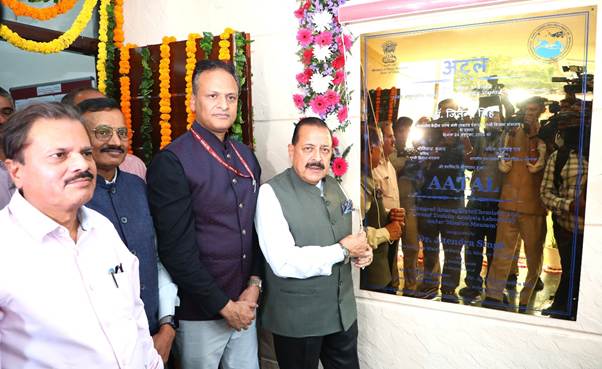
Dr. Sachin Ghude, Project Director, MAQWS, said the integrated facility would strengthen air-quality management in Delhi-NCR by providing early warnings and detailed information on the sources contributing to pollution, including stubble burning, vehicular emissions, construction and road dust. He said the information would help the Commission for Air Quality Management (CAQM) and other implementing agencies identify the major sources of pollution, plan targeted interventions and assess their effectiveness.
He added that the associated air-quality forecasting system provides forecasts at a 400-metre resolution for the next 72 hours, enabling pollution levels and their likely sources to be assessed for individual pockets of Delhi. Describing the forecasting capability as a major technological advance, Dr. Ghude said India had developed a high-resolution system comparable with global forecasting systems, with the potential to extend similar capabilities to other cities.
Emphasising the importance of coordination among government agencies, Dr. Jitendra Singh said air pollution could not be addressed by a single department working in isolation. He described the initiative as an example of the whole-of-government approach advocated by Prime Minister Narendra Modi, bringing together scientific institutions, environmental authorities, pollution-control agencies and disaster-management stakeholders.
The Minister said coordinated engagement among the Ministry of Earth Sciences, the Ministry of Environment, Forest and Climate Change, pollution-control authorities and disaster-management agencies would be important for translating scientific information into effective action.
For the Commission for Air Quality Management (CAQM) and other implementing agencies, the facility will provide measurement-based evidence to identify the sources responsible for deteriorating air quality, prioritise sectors and locations for intervention, and support coordinated measures across Delhi-NCR. When combined with AIRWISE forecasts, this information can strengthen decisions relating to preventive measures and responses under the Graded Response Action Plan (GRAP).
The inauguration of AATAL marks an important step towards connecting advanced atmospheric science with public policy and on-ground action. By bringing real-time measurements, chemical characterisation, source apportionment and forecasting together, the facility will help authorities move towards a more precise understanding of air pollution and a more coordinated response to the challenge facing Delhi-NCR.